


Homo floresiensis, a small ancient hominin species known as hobbits, may have become extinct around 50,000 years ago as reduced rainfall reduced the amount of prey available for hunting. This may have forced them to migrate to areas where they competed with modern humans, a new study suggests.
The research team pointed out that lack of rainfall was probably not the only reason for the extinction. A volcanic eruption that occurred about 50,000 years ago may also have been a major factor in their extinction.
you may like
Now, in a paper published Monday (December 8) in the journal Communication, Earth & Environment, scientists report that rainfall on the island appears to have decreased significantly before 50,000 years ago. It was also discovered that the population of the stegodon, a now extinct relative of the elephant that the hobbits hunted, disappeared from Flores Island about 50,000 years ago.
To find out how the island’s rainfall has changed, the researchers studied stalagmites in Lian Luar, a cave on Flores Island near Lian Bua. Stalagmites grow when water evaporates and calcium carbonate is formed. New growth also contains small amounts of other minerals, such as magnesium. Stalagmites do not grow as quickly when water is scarce, and when they do, they tend to be low in calcium carbonate and high in magnesium, the researchers note in the paper. This means that by measuring the ratio of magnesium to calcium carbonate, the researchers can determine when rainfall has decreased or increased, and by how much.
The researchers found that average annual precipitation fell from 61.4 inches (1,560 mm) 76,000 years ago to 40 inches (990 mm) 61,000 years ago. This decline in rainfall levels continued on the island until 50,000 years ago. At that point there was an eruption at a nearby volcano, and a layer of ejected rock covered the island.
When the researchers analyzed the remains of Stegodon teeth, they found that the numbers of these animals declined on the island between 61,000 and 50,000 years ago, and then disappeared after an eruption. Researchers believe that reduced rainfall has caused the stegodon population to decline, making life more difficult for hobbits, which make up their main diet.
As rainfall decreased, the stegodon population moved to the island’s coast, and the hobbits may have followed suit.
“If Stegodon populations were declining due to reduced river flows, we suspect they may have migrated to more stable water sources,” Nick Scroxton, research scientist in hydrology, paleoclimate and paleoenvironment at University College Dublin and co-author of the paper, told Live Science via email. “So it’s no wonder the hobbits followed suit.”
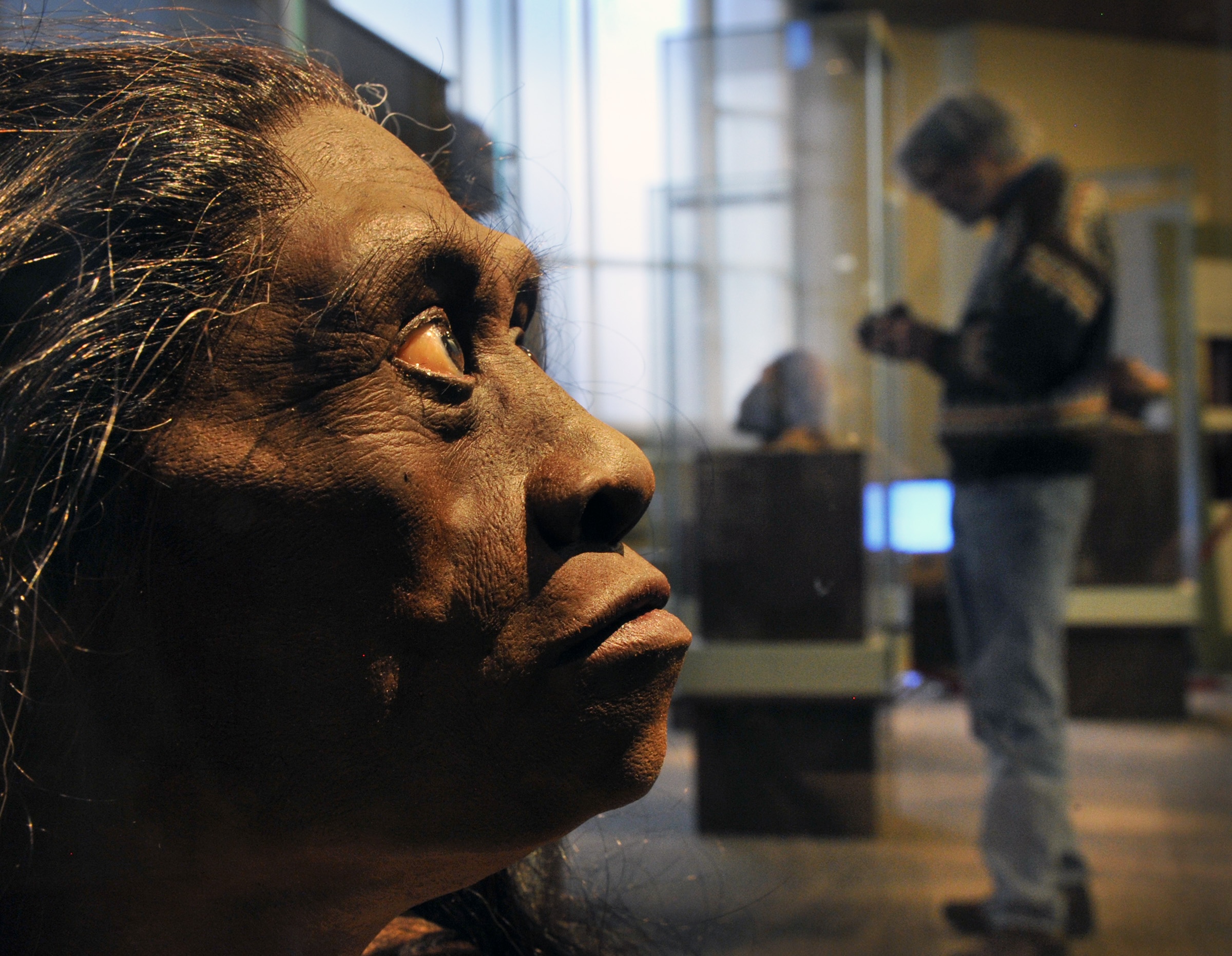
Moving to the coast may have brought the hobbits into contact with Homo sapiens populations that were expanding throughout the region. This contact may have led to competition for resources or even conflict between groups, Scroxton suggested. Additionally, a volcanic eruption about 50,000 years ago would have made things even worse for the Hobbits.
“This looks like a very impressive study,” Julien Ruois, a paleontologist at Australia’s Griffith University who has conducted extensive research on humans but was not involved in the new study, told Live Science via email. He noted that reduced rainfall could have a big impact on small islands like Flores.
“There is limited space on the island, and there are limited types of environments that can be anchored in the port,” Ruois said. “If conditions become dry, animals will not be able to move off the island as easily and the potential refuges available to them will quickly disappear or become very crowded.”
Debbie Arg, emeritus lecturer in the Australian National University’s School of Archeology and Anthropology, who was not involved in the research, also praised the work. “This paper provides us with excellent insights into the changing climatic environment of this region and is a very welcome contribution to knowledge about the past conditions of Flores,” Arg told LiveScience via email.
Source link
