Close Menu
  • Home
  • Identity
  • Inventions
  • Future
  • Science
  • Startups
  • Spanish
What's Hot

Waymo temporarily suspends service in San Francisco as robotaxis stall due to power outage

Iran’s Infy APT resurfaces with new malware activity after years of silence

Google and Apple reportedly warned employees with visas to avoid traveling abroad

Facebook X (Twitter) Instagram
  • Home
  • About Us
  • Advertise with Us
  • Contact Us
  • DMCA
  • Privacy Policy
  • Terms & Conditions
  • User-Submitted Posts
Facebook X (Twitter) Instagram
Fyself News
  • Home
  • Identity
  • Inventions
  • Future
  • Science
  • Startups
  • Spanish
Fyself News
Home » Russia’s Vezimiany volcano exploded on its own 69 years ago. It is now almost fully grown.
Science

Russia’s Vezimiany volcano exploded on its own 69 years ago. It is now almost fully grown.

userBy userDecember 10, 2025No Comments3 Mins Read
Share Facebook Twitter Pinterest Telegram LinkedIn Tumblr Email Copy Link
Follow Us
Google News Flipboard
Share
Facebook Twitter LinkedIn Pinterest Email Copy Link

In late November, Russia’s restless volcano could erupt, sending a cloud of ash 10 kilometers into the sky and pushing the mountain closer to its original height.

Vezimianny Volcano is a dramatic cone-shaped stratovolcano on the Kamchatka Peninsula in Russia’s far east. It self-destructed in 1956, but a 2020 study found that it had largely returned to normal, and that an eruption like the one that produced the plume on November 26 was the cause. According to the study, the mountain should reach its pre-collapse height between 2030 and 2035.

Seventy years ago, Bejimianni towered at least 10,213 feet (3,113 meters) above sea level. Then, on March 30, 1956, a massive eruption blew the volcano’s slopes, collapsing its peak and turning the conical mountain into a horseshoe-shaped stone amphitheater.

you may like

But almost immediately the mountain began to reform, and a lava dome began to erect in the middle of this amphitheater. Kamchatka’s Institute of Volcanology and Seismology, part of the Russian Academy of Sciences, has been monitoring the mountain’s growth for years through field surveys, webcams, and observation flights. A series of photos taken from airplanes from 1949 to 2017 show the volcano has nearly reached its previous height, researchers reported in 2020. Researchers found that between 1956 and 2017, the mountain added an average of 932,307.2 cubic feet (26,400 cubic meters) of rock per day.

“The most surprising thing was the rapid growth of new volcanic edifices,” study co-authors Alexander Belousov and Marina Belousova, volcanologists at the Institute of Volcanology, told Live Science via email.
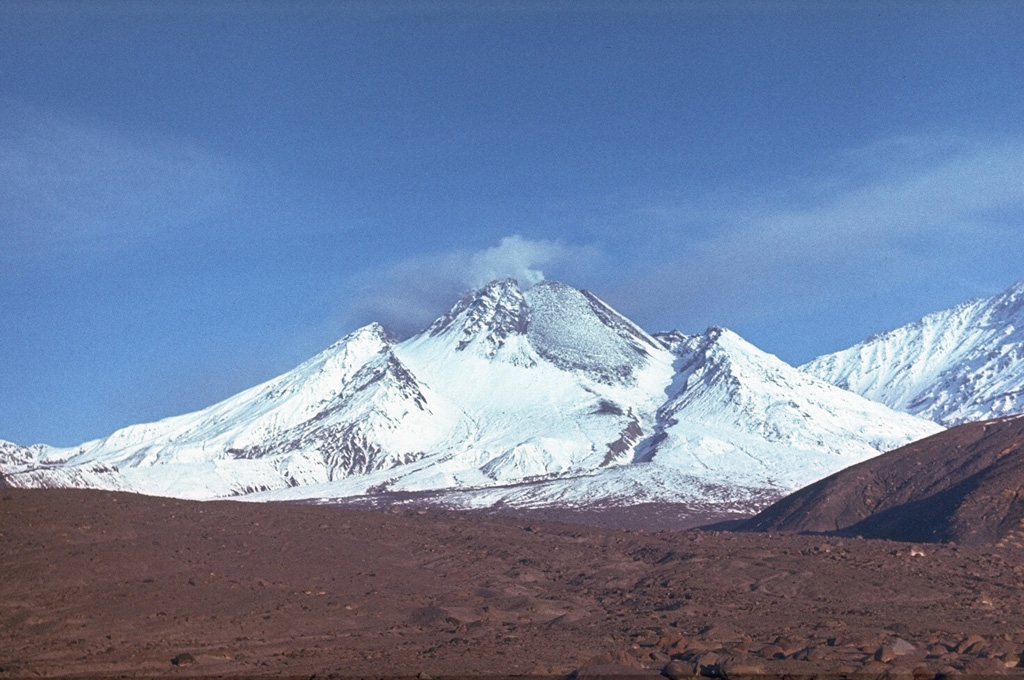
Regrowing Vejimianni volcano

The lava dome began to grow immediately after the eruption. The photo is from 1988. (Image credit: Photo by Alexander Belousov, 1988 (Kamchatka Volcanic Research Institute, Russia, Creative Commons BY-NC 4.0).)

The volcano currently has explosive eruptions on average several times a year. The event in late November produced not only billowing clouds of volcanic ash but also hot avalanches of gas and rock known as pyroclastic flows, the Smithsonian’s World Volcanoes Program reported on Dec. 2.

Once the volcano reaches its original height, the stability of its slopes will become a key issue, Belousov and Belousova told Live Science.

Get the world’s most fascinating discoveries delivered straight to your inbox.

“Similar structures inside horseshoe-shaped craters are known to have experienced another major collapse, potentially resulting in a large explosive eruption,” the researchers said.
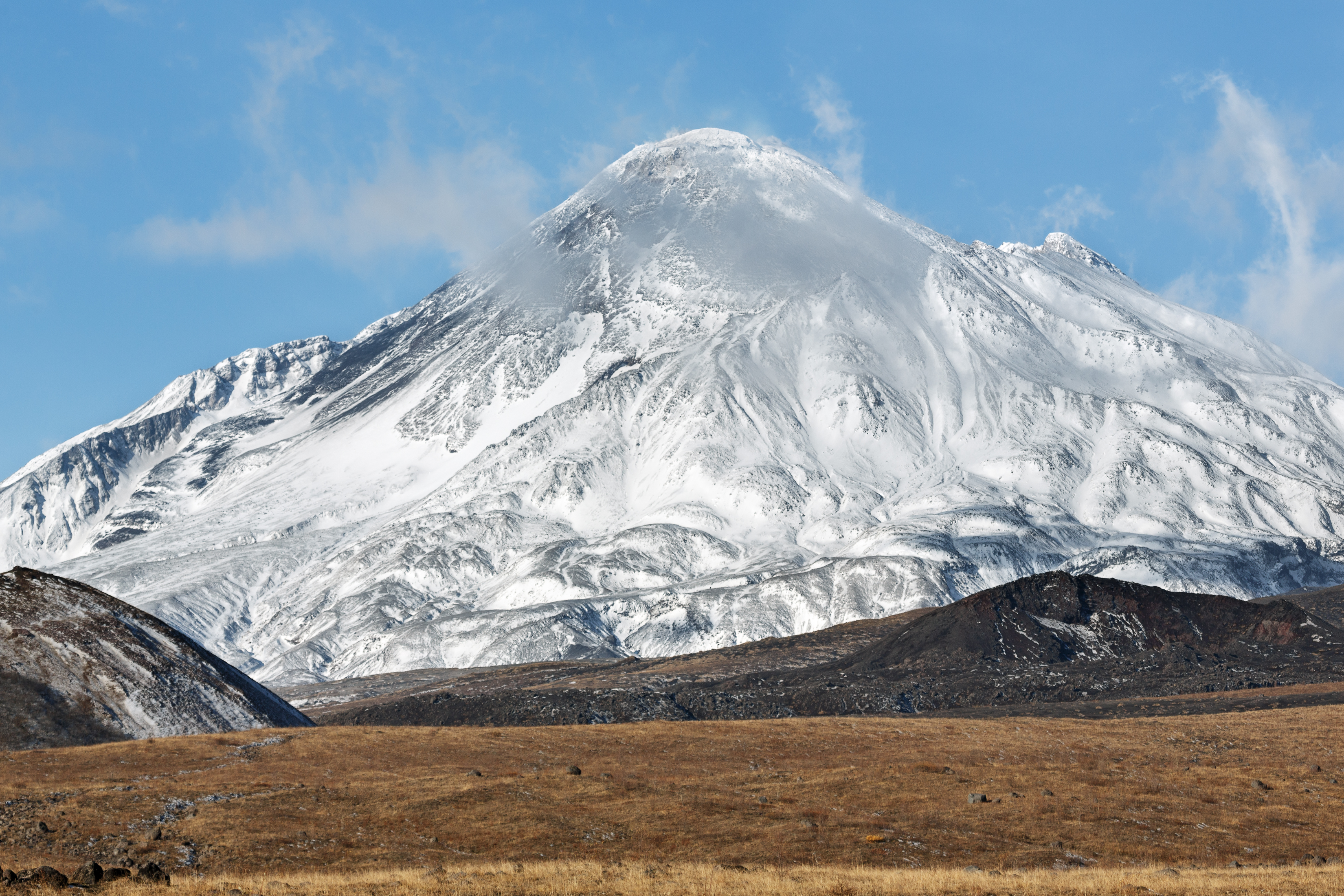
Bezmianni volcano covered with snow and ice with grass in the foreground

Vejimianni (pictured in 2017) is expected to reach its pre-1956 eruption height within the next 5 to 10 years. (Image credit: Alexandr Piragis/Getty Images)

High-altitude images reviewed in 2020 showed that the volcano not only ejects explosive clouds of ash and gas, but also grows through what scientists call effusive eruptions, or non-explosive lava flows. The first of these lavas were observed in 1977. Over time, this lava lost its content of the mineral silica, becoming less viscous and less viscous. The layers of this erupting lava piled up, turning Vegemianni back into a cone-shaped stratovolcano.

Belousov and Belousova said researchers are still monitoring the mountain from the ground and from satellites. Although each volcano has its own unique trajectory, there are many volcanoes around the world that have experienced collapse and rebirth, such as Mount St. Helens in the United States.

“The collected dataset is extremely important because the knowledge gained will enable volcanologists around the world to predict the long-term behavior of various volcanoes that have experienced large-scale collapses in history,” the researchers said.


Source link

#Biotechnology #ClimateScience #Health #Science #ScientificAdvances #ScientificResearch
Follow on Google News Follow on Flipboard
Share. Facebook Twitter Pinterest LinkedIn Tumblr Email Copy Link
Previous ArticleNew discoveries at Hadrian’s Wall are changing the picture of what life was like on the border of the Roman Empire
Next Article How attackers exploit cloud misconfigurations across AWS, AI models, and Kubernetes
user
  • Website

Related Posts

This week’s science news: Japan’s laser weapons test bids farewell to Comet 3I/ATLAS, AI solves ‘impossible’ math problem

December 20, 2025

Interstellar comet 3I/ATLAS is rapidly moving away from us. Can we ‘intercept’ it before it leaves us forever?

December 19, 2025

AI is solving ‘impossible’ math problems. Can it best the world’s top mathematicians?

December 19, 2025
Add A Comment
Leave A Reply Cancel Reply

Latest Posts

Waymo temporarily suspends service in San Francisco as robotaxis stall due to power outage

Iran’s Infy APT resurfaces with new malware activity after years of silence

Google and Apple reportedly warned employees with visas to avoid traveling abroad

‘It felt so wrong’: Colin Angle on iRobot, the FTC, and the Amazon deal that never was

Trending Posts

Subscribe to News

Subscribe to our newsletter and never miss our latest news

Please enable JavaScript in your browser to complete this form.
Loading

Welcome to Fyself News, your go-to platform for the latest in tech, startups, inventions, sustainability, and fintech! We are a passionate team of enthusiasts committed to bringing you timely, insightful, and accurate information on the most pressing developments across these industries. Whether you’re an entrepreneur, investor, or just someone curious about the future of technology and innovation, Fyself News has something for you.

Castilla-La Mancha Ignites Innovation: fiveclmsummit Redefines Tech Future

Local Power, Health Innovation: Alcolea de Calatrava Boosts FiveCLM PoC with Community Engagement

The Future of Digital Twins in Healthcare: From Virtual Replicas to Personalized Medical Models

Human Digital Twins: The Next Tech Frontier Set to Transform Healthcare and Beyond

Facebook X (Twitter) Instagram Pinterest YouTube
  • Home
  • About Us
  • Advertise with Us
  • Contact Us
  • DMCA
  • Privacy Policy
  • Terms & Conditions
  • User-Submitted Posts
© 2025 news.fyself. Designed by by fyself.

Type above and press Enter to search. Press Esc to cancel.