


The Amazon rainforest is inching toward a “subtropical” climate regime that has not existed on Earth for at least 10 million years, a new study suggests.
Scientists predict that this regime could lead to more frequent and extreme droughts, leading to mass tree mortality. By 2100, the Amazon could experience hot droughts lasting 150 days a year and extending into the rainy season, according to a study published in the journal Nature on Wednesday (December 10).
you may like
Scientists believe that the last time a temperate climate existed was between 40 and 10 million years ago, during the Eocene and Miocene epochs. During the mid-Eocene, Earth’s average temperature was 82 degrees Fahrenheit (28 degrees Celsius), 25 degrees Fahrenheit (14 degrees Celsius) higher than today’s average. Previous studies have suggested that forests near the equator had fewer mangroves and evergreen trees.
Currently, the Amazon rainforest experiences hot droughts for days or weeks out of the year. However, climate change is lengthening the region’s dry season (which typically lasts from July to September) and increasing the number of hotter-than-normal days each year.
Chambers and colleagues analyzed 30 years of temperature, humidity, soil moisture, and sunlight intensity data from a forested area north of Manaus, a city in the heart of the Brazilian Amazon. The researchers also examined information from sensors measuring water and sap flow inside the tree trunks at the site, which helped them understand how the trees were coping with drought conditions.
Researchers found that during droughts, trees struggled to access water and stopped absorbing carbon dioxide (CO2). This is because evaporation rates sharply increase during droughts, reducing soil moisture. Trees responded and conserved water by closing the pores in their leaves that control the exchange of water and gases with the atmosphere. However, this simultaneously blocked the uptake of CO2, which is necessary for plant tissue growth and repair.
As a result, when drought conditions became extremely severe, some trees died due to lack of carbon dioxide. And when soil moisture fell below a threshold of 33%, meaning only one-third of the soil’s pores were filled with water, the trees also developed bubbles in their sap that resembled blood clots in human blood vessels, disrupting normal circulation within the fluid-filled xylem of the plants.
“If enough emboli occur, the tree will die,” Chambers says. The soil moisture threshold that triggered this collapse was surprisingly consistent across two El Niño years, 2015 and 2023, and matched thresholds measured at other study sites in the Amazon. “It was a real surprise for everyone,” he said.
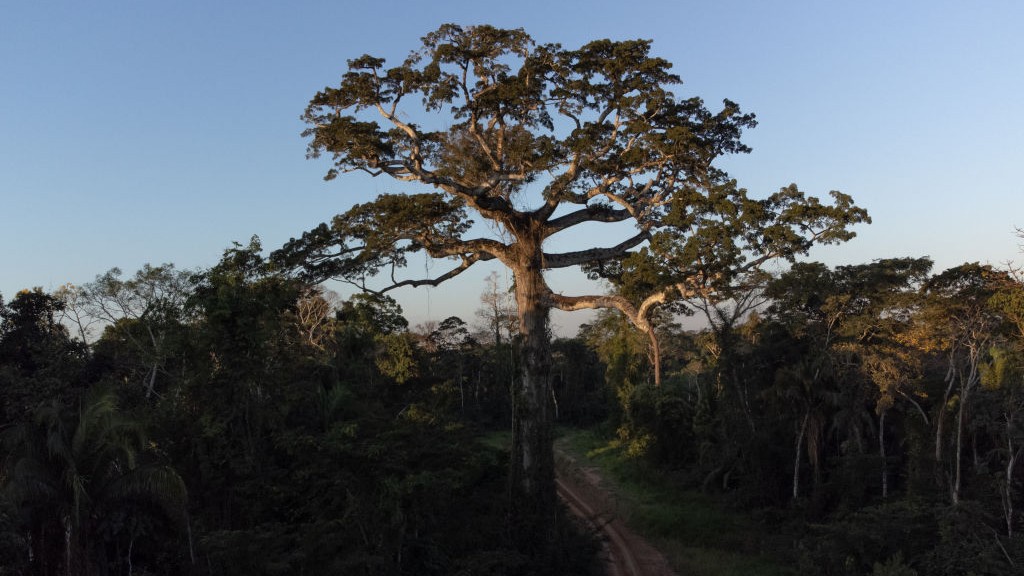
Annual tree mortality in the Amazon rainforest, currently just over 1%, could rise to 1.55% by 2100, researchers found. While this may seem trivial, Chambers said it makes a big difference on an overall rainforest scale.
Fast-growing trees required abundant water and carbon dioxide to maintain growth and were therefore more vulnerable to high-temperature droughts than slow-growing trees. This suggests that slow-growing trees, such as yellow ipe (Handroanthus chrysanthus) and ciliat (Dipteryx micrantha), will eventually dominate the Amazon as temperatures rise. That is, if these trees can cope with increased water stress and the rate of temperature change.
The results suggest that rainforests in other parts of the world, such as West Africa and Southeast Asia, may also be transitioning to a temperate climate regime. This change will have a dramatic impact on the Earth’s carbon cycle, as rainforests absorb large amounts of CO2 that would otherwise be emitted into the atmosphere.
Projections of what will happen to the Amazon by 2100 assume negligible reductions in CO2 emissions, so “it’s up to us to decide how much of this temperate climate we actually create,” Chambers said. “If you’re going to emit as much greenhouse gas as you want without any controls, you’re going to create this greenhouse gas faster.”
Source link
