

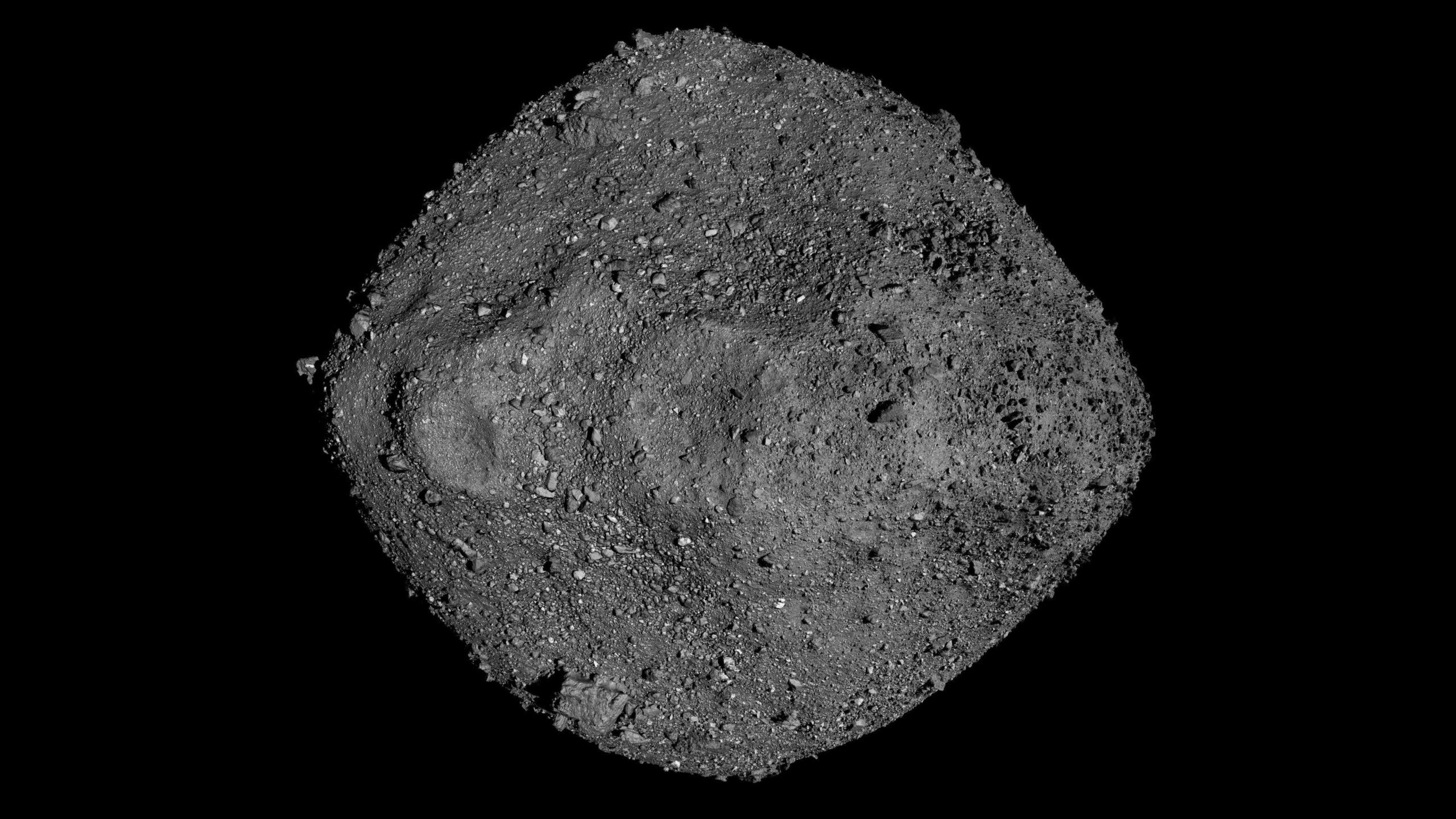
The asteroid Bennu, near Earth, contains stardust, older than our solar system, as well as organic materials and ice from interstellar space.
Scientists around the world have bennu samples since 2023 brought asteroid material to Earth in 2023. This flew alongside the asteroid after a temporary landing in 2020 and scooping up samples courtesy of NASA’s Osiris Rex mission.
The findings provide a glimpse into the conditions of the universe before the solar system began 4.6 billion years ago, revealing more about the parent body that produced asteroids that were 1,600 feet wide (nearly 500 meters).
You might like it
The violent past
The first of three papers published on August 22 in the Nature Astronomy Journal suggests that after a complicated history, Bennu’s ancestors were broken in violent clashes. Its old body contained materials from many different environments. It is near and far from the Sun, but is still within the solar system and beyond the interstellar solar system.
Scientists found these locations in Bennu dust samples by looking at isotopes or elements types. Isotopes derived from the solar system were wearing different makeup than those from, for example, interstellar stardust.
“All of these components were transported over distances to the area formed by the Bennu pro-asteroid,” Ann Nguyen, a planetary scientist at Johnson Space Center, NASA, Houston, said in a NASA statement.
Related: James Webb Telesscope reveals that asteroids and Riug could be part of the same giant space lock
Scientists suggest a pro-asteroid that was formed in the outer solar system, perhaps beyond Jupiter and Saturn. But co-starring author Jessica Burns, an associate professor at the University of Arizona’s Moon and Planetary Research Institute, came in a statement from the University of Arizona, saying, “I think this parent body was hit by an incoming asteroid and broke,” co-starring author Jessica Burns said.
After the initial shock, “the fragments were reassembled and this could have been repeated several times,” Burns added. In the end, some of the surviving materials were combined with Bennu.
Bennu vs. Ryugu
The second paper, published in the journal Nature Geoscience on August 22, compared Bennu with primitive metstones, from which samples were collected by the Japan Aerospace Exploration Agency’s Hayabusa2 mission.
The parent-agnos of Ryugu, Bennu and metstones are likely to have been born in “similarly distant regions of the early solar system,” NASA officials wrote in a statement from the Space Agency. But Bennu differs in several ways from other sampled bodies, and “the area has changed over time or is not mixed in the same way as some scientists thought,” they said.
Specifically, Bennu materials from the pro-asteroids changed dramatically when contacted with water, a second study showed.
“Bennu’s parents and children have accumulated ice and dust,” Tom Zega, co-leader of the second paper and professor of planetary science at the University of Arizona, said in a NASA statement. “Eventually the ice melted and the resulting liquid reacted with the dust to form what we see today: a sample of 80% minerals, including water.”
“I think the pro-asteroids have accumulated a lot of ice material from the outer solar system,” Zega added.
Micrometric
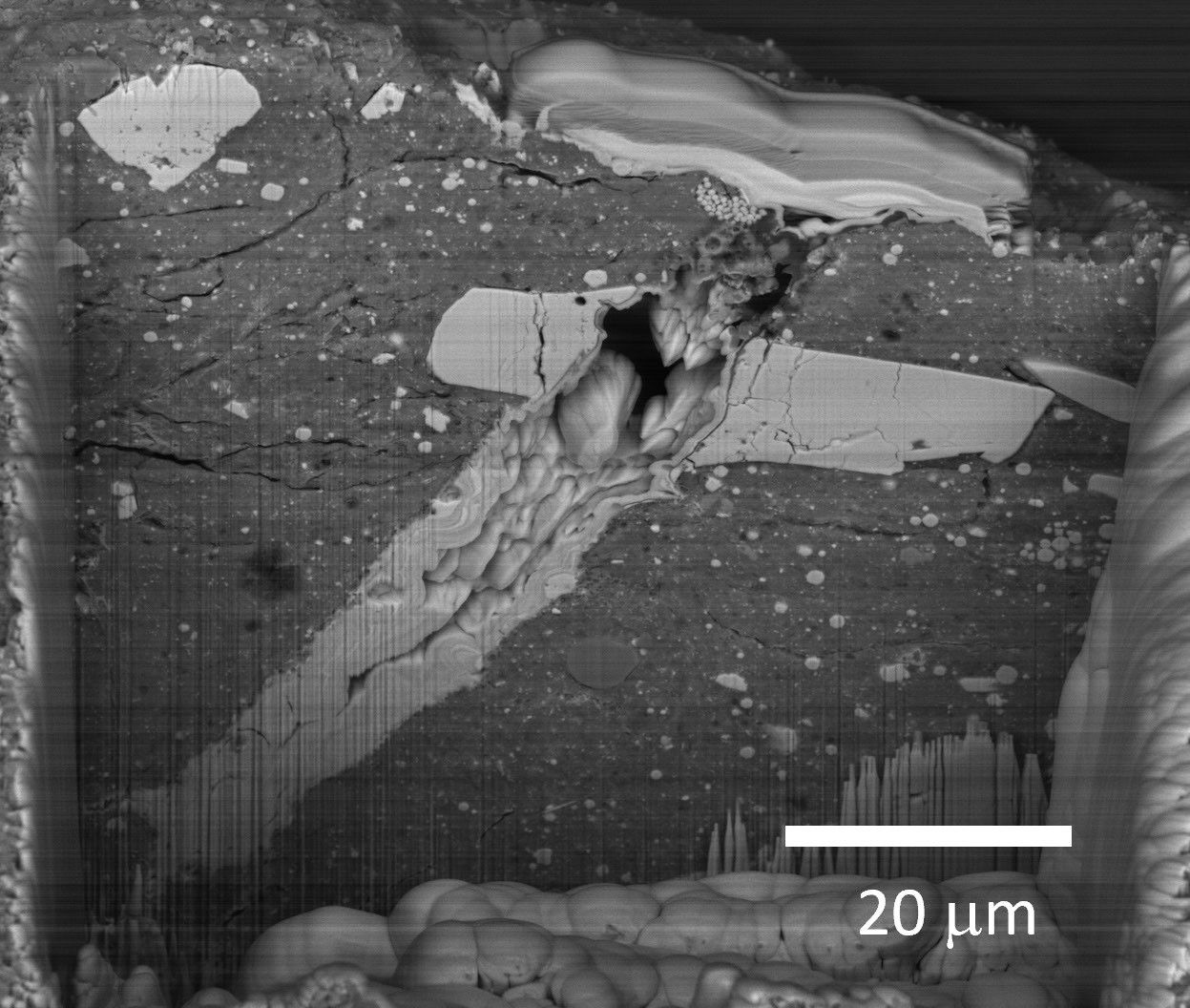
The third paper, published in the journal Nature Geoscience on August 22, tracked sufficient evidence that Micrometeorites hit Bennu. These small rocks left microscopic craters and “impact melts” – once melted rock masses – on the surface of the sample. Researchers also saw traces of solar wind – constant flow of particles coming from the sun – represented in the sample.
“Weathering of the surface at Bennu occurs much faster than traditional wisdom has it, and it appears that the impact melting mechanism is dominated, contrary to what we originally thought.”
Furthermore, Bennu itself does not host life, but the study will help scientists learn how life is born on our planet, says Michelle Thompson, the second leading author of the paper and an associate professor at Purdue University, which specializes in space weathering.
“Asteroids are relics of the early solar system. They are like time capsules,” Thompson said in a statement from Purdue. “They can be used to investigate the origins of the solar system and open windows to the origins of life on Earth.”
Source link
