


About 1,800 years ago, people preparing for burial in Roman England created a plaster-like paste and applied it to corpses, leaving fingerprints that are still visible today, researchers reported in a recent blog post.
These newly discovered prints reveal a pragmatic approach to funerary practices in the third and fourth centuries AD, the archaeologists said.
you may like
Gypsum is a calcium-based mineral that was an important component of ancient plaster and cement. When heated and mixed with water, gypsum becomes a pourable liquid and is sometimes called plaster of Paris. This thick liquid, when poured over a corpse, hardens into plaster, leaving behind an integument or impression of the deceased, similar to the casting of Pompeii.
At least 70 liquid plaster burials have so far been discovered in the Yorkshire area. Examining one of these, a sarcophagus discovered in the 1870s that had not previously been properly studied, the team found surprising clues about how liquid plaster was applied. That means someone spread it by hand.
Maureen Carroll, a Roman archaeologist at the University of York and lead researcher on the Seeing the Dead project, told Live Science via email: “When we lifted the casing and started cleaning and 3D scanning, we were surprised to find a handprint with fingers attached.” “They had never been seen before, and no one had ever removed the casing from the sarcophagus.”
Image 1/4
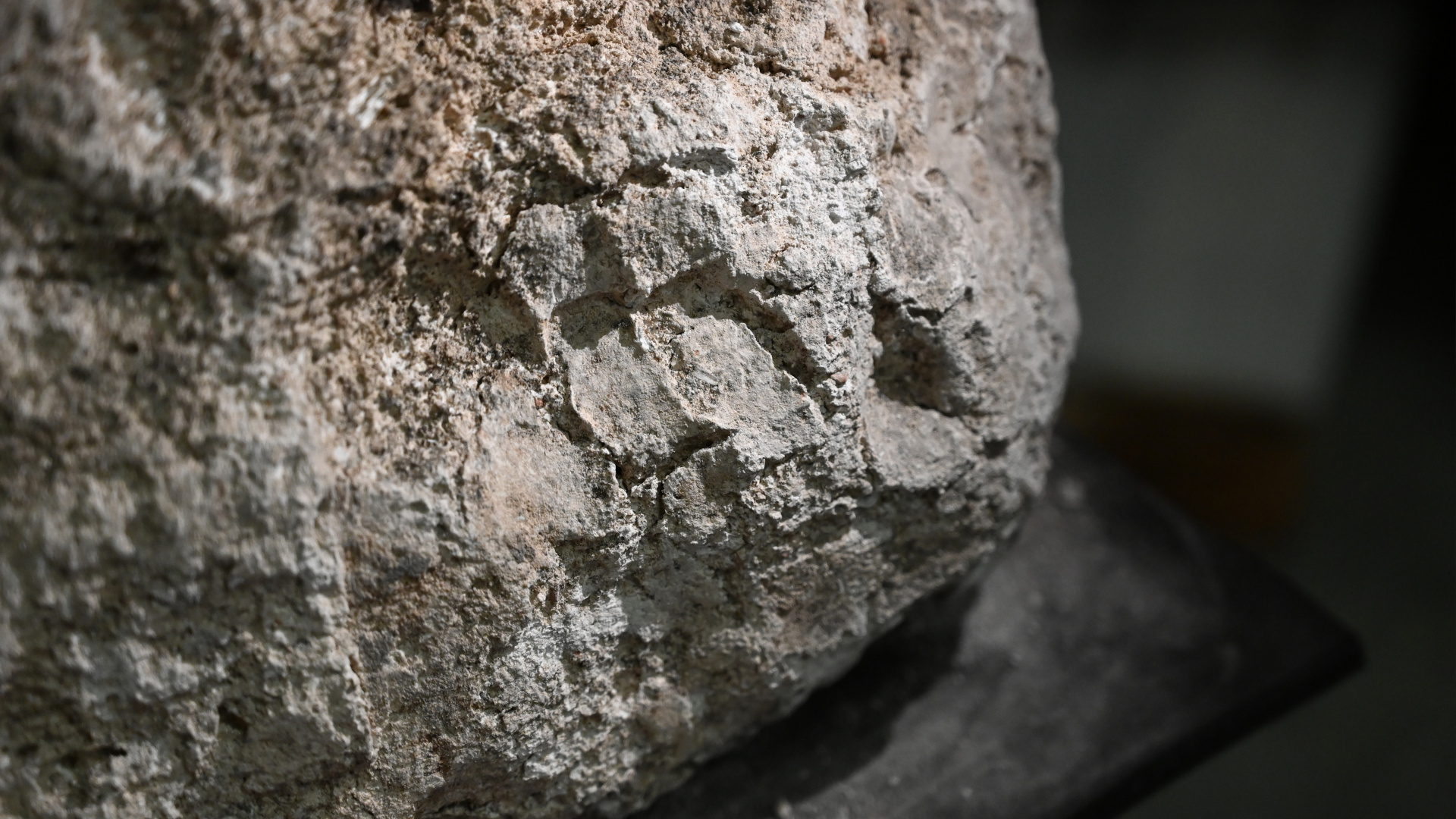
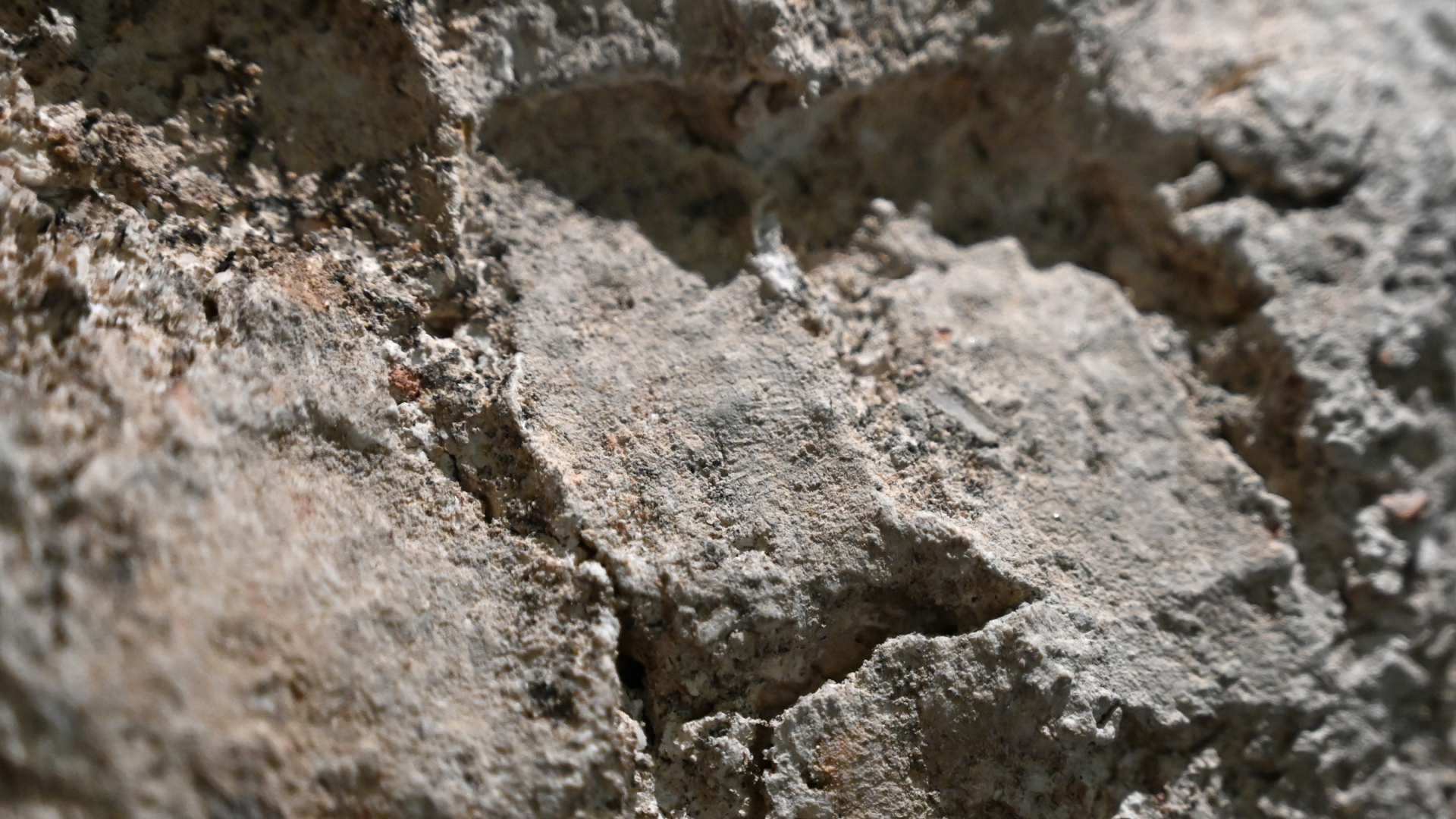
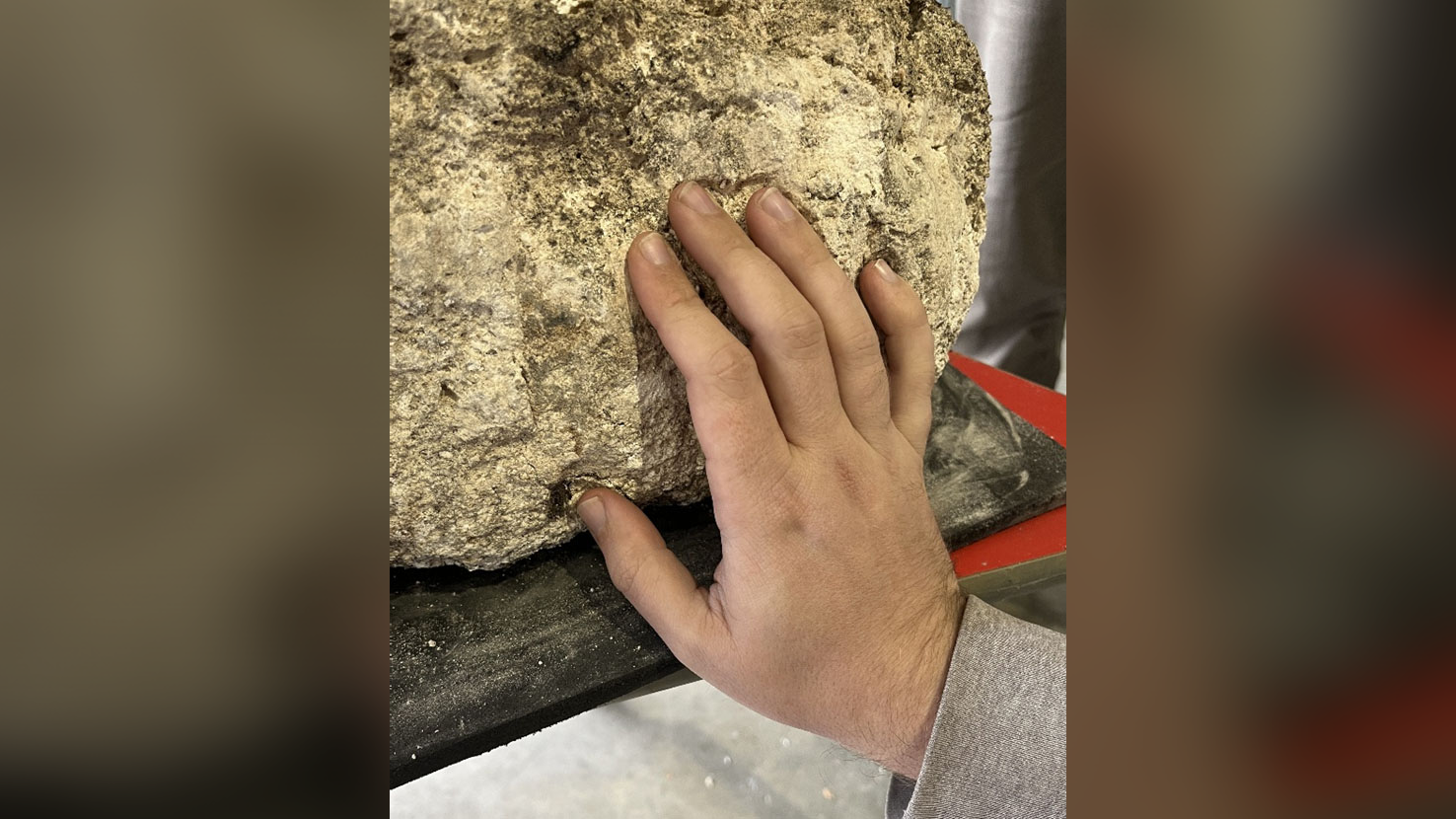

Carroll explained in a Dec. 10 blog post that the researchers had previously assumed that the liquid gypsum was heated to at least 300 degrees Fahrenheit (150 degrees Celsius) and poured onto the bodies. However, the presence of fingerprints means the plaster mixture was probably a soft paste that someone rubbed onto the body inside the coffin. The plaster extended so close to the coffin’s edges that no fingerprints were visible until the team removed the casing from the coffin.
Fingerprints and handprints reveal that the Romans had close personal contact with the dead, Carroll said. “They are significant traces of human activity and are not otherwise known to persist on bodies in Roman funerary contexts,” she wrote in a blog post.
These traces may store additional clues about the person who buried the deceased, revealing, for example, whether a professional mortician or a family member was the last person to touch the deceased.
“We hope to extract any potential DNA remnants from the handprints for testing at the Francis Crick Institute in London,” Carroll said. Although it’s a long way off, “the best-case scenario is that we might be able to infer genetic sex, which would be a huge accomplishment!”
Editor’s note: This article was updated on Dec. 12 at 12:55 p.m. ET to correct the number of liquid plaster burials discovered to date to 70.
Roman Britain Quiz: What do you know about the Empire’s conquest of the British Isles?
Source link
