

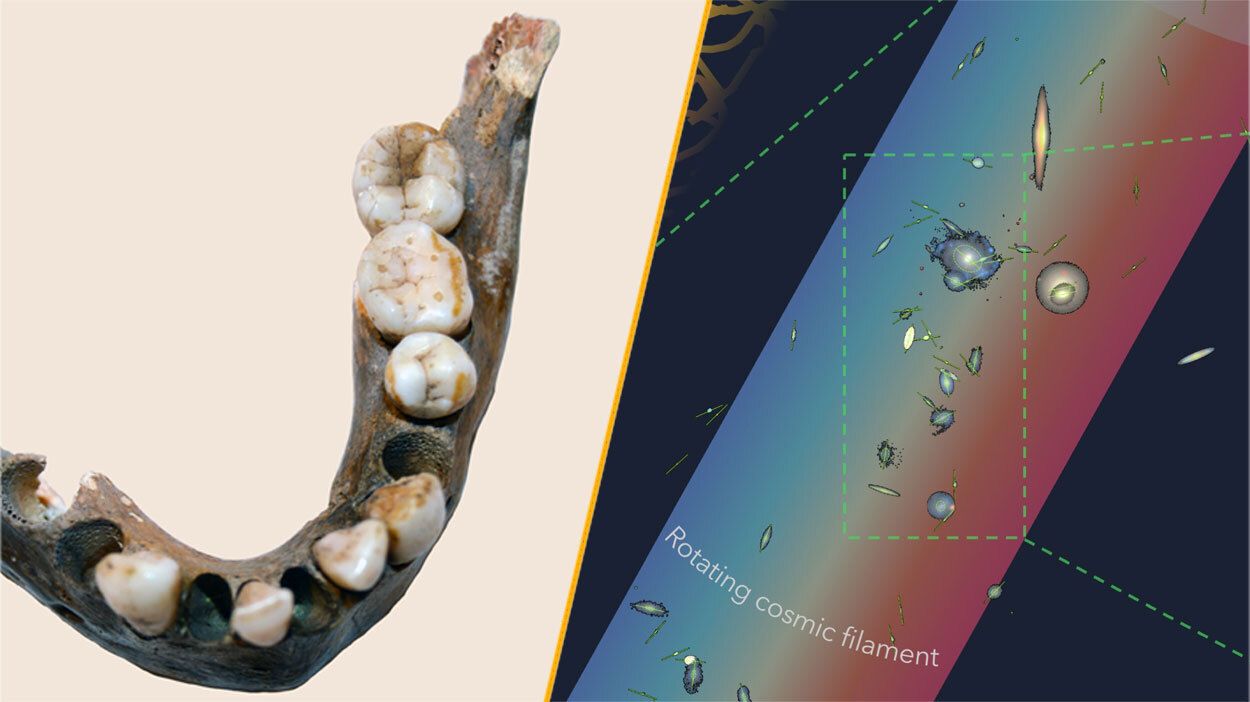
This week’s biggest science news took us to a region 140 million light years away, where scientists have discovered the largest rotating object in the known universe. Astronomers discovered this giant rotating filament, which is wider than the Milky Way and connected in a daisy chain of 14 galaxies. The filament spins at about 68 miles per second (110 kilometers per second).
Researchers looked closer to home in southern Africa. There, human populations were genetically isolated for 100,000 years.
Our favorite interstellar visitor is erupting

The world has been fascinated by the interstellar visitor comet 3I/ATLAS since it zoomed into our consciousness in July. Since then, we’ve learned a lot about space invaders that aren’t alien spaceships.
Now, researchers have zeroed in on this fast-moving space rock using the João Oro telescope at the Monsec Observatory in northeastern Spain, and combined their observations with observations made by other observatories in the region. The research team noticed that the comet heated up and brightened rapidly as it approached the Sun. This is a clue that ice is sublimating from the surface. 3I/ATLAS would then be similar to other objects in our solar system, such as dwarf planets orbiting outside Neptune.
More space news
— James Webb telescope discovers strange ‘superpuff’ planet desperately chasing its own atmosphere through space
— An extrasolar planet that once orbited next to Earth — and may be why we have a moon
-Russia accidentally destroys the only operating launch pad when astronauts take off to the ISS
life’s little mysteries

Dreaming is a nearly universal human experience. However, how vivid, realistic, and memorable dreams are varies greatly from person to person. But what about the same person’s dreams? Do dreams change as we age?
—If you enjoyed this, sign up for the Life’s Little Mysteries newsletter
make water from thin air

Researchers at the Massachusetts Institute of Technology have discovered a way to suck water out of the air and turn it into drinkable water. The process only takes a few minutes. Traditional evaporative water recovery systems cool humid air or use sponge-like materials to absorb water vapor and condense it into droplets. Past versions typically relied on sunlight to power evaporation, which could take hours or days and did not work in arid regions.
The new method uses sound waves to shake liquid off the sponge, making it 45 times more efficient than relying on evaporation alone, the researchers say. One challenge with this new device, however, is that it requires a power source, but the researchers think they can get around this by combining the device with solar cells.
Discover more technology news
— When an AI algorithm is labeled “for women,” people are more likely to abuse it
— New ‘physics shortcuts’ allow you to tackle quantum problems once reserved for supercomputers and AI on your laptop
Also featured in this week’s science news
— The law of “maximum randomness” explains how broken objects shatter in the most annoying ways
– Early research suggests ‘lazy eye’ may be corrected by injecting it with an anesthetic.
— Anacondas got huge 12 million years ago — and it worked so well that they haven’t changed size since then
– Researchers discover that volcanic eruption caused the ‘butterfly effect’ and caused the Black Death.
beyond the headlines
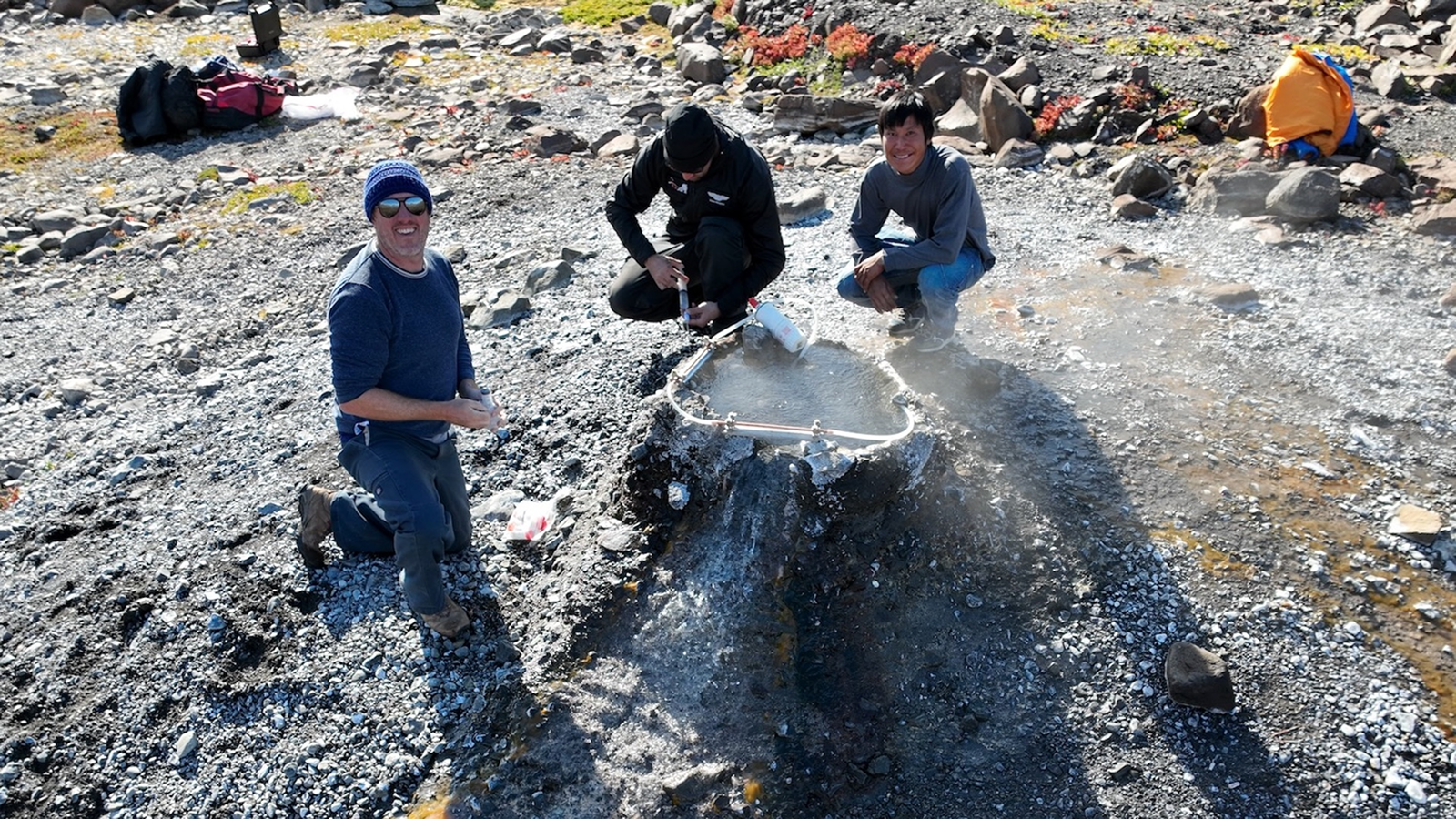
Helium is used in MRI machines, superconductors, and quantum computers, but a major shortage is imminent. Historically, helium was discovered in very small quantities alongside natural gas, making the extraction of usable helium a huge source of carbon emissions.
But as Live Science staff writer Sascha Pare discovered, several huge, highly concentrated, carbon-free helium reservoirs have changed the geological landscape.
Will it help find other large helium stores and solve the helium shortage?
something for the weekend
If you’re looking for something a little longer to read over the weekend, here are some of the best interviews, opinion pieces, and science history published this week.
—“Intelligence comes at a price, and for many species the benefits are not worth it”: A neuroscientist’s take on how human intelligence evolved [Book extract]
—The AI-generated image of a cat on a banana exists because children scavenge in the soil for toxic substances. Is it really worth it? [Opinion]
— History of Science: Computer Scientists Reveal ‘Moore’s Law’ That Guided Chip Design for Half a Century — December 2, 1964 [Science history]
science is in motion
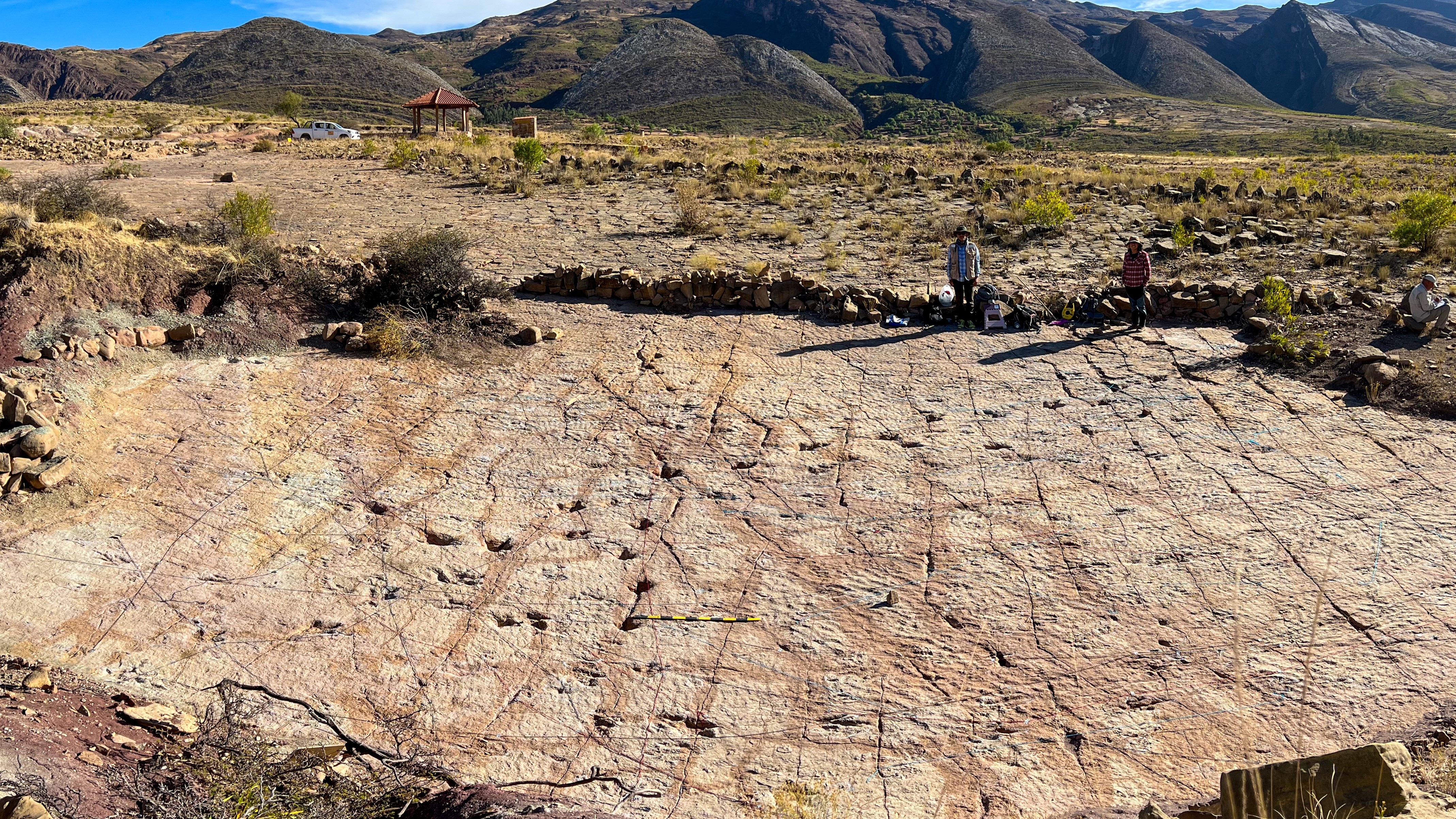
Scientists excavating at Bolivia’s Carreras Pampa stadium have discovered more than 18,000 fossilized dinosaur footprints and swimming tracks. The vast trail of ancient footprints spans an area of 80,570 square feet (7,485 square meters), and videos taken by researchers of the site demonstrate its enormity.
Follow Live Science on social media
Want more science news? Follow our Live Science WhatsApp channel to keep up with the latest discoveries. It’s the best way to get expert reports on the go, but even if you don’t use WhatsApp, you can use Facebook, X (formerly Twitter), Flipboard, Instagram, TikTok, Bluesky, and LinkedIn.
Source link
