


It’s been an exciting week in science news, with interesting directions in our understanding of human evolution and animal behavior. But before we get too deep into terrestrial matters, let’s look to the skies and see what has been discovered in space.
A bright binary star system could soon glow with the glow of thousands of solar cores. The system, called V Sagittarius, is emitting bright flares before going supernova a century from now. Skywatchers are looking forward to the flare, as it is visible to the naked eye day and night. Meanwhile, a mysterious X-ray signal from deep space may actually be the deathbed of a star torn to pieces by two separate black holes.
Will killer whales and dolphins team up?

Killer whales off the coast of British Columbia have been seen hunting with dolphins and sharing salmon fillets after killing them.
The two species in this region generally show little sign of mutual aggression and even seek each other out, according to a study published this week, which is unusual given that some dolphins attack killer whales while killer whales hunt dolphins elsewhere.
The study authors claim this discovery is the first documented cooperative hunting and prey sharing between orcas and dolphins. However, not all experts agree that this behavior indicates that these species are cooperating. Rather, it may be a type of kleptoparasitic disease in which an animal steals food that it has already hunted.
life’s little mysteries

In 30 BC, Mark Antony and Cleopatra VII died by suicide after being defeated by Octavian’s forces in a civil war.
But what would have happened if Antony and Cleopatra had defeated Octavian, who became Rome’s first emperor? Would they have become rulers of Rome? How would history have been different?
—If you enjoyed this, sign up for the Life’s Little Mysteries newsletter
Neanderthals started fire very early.
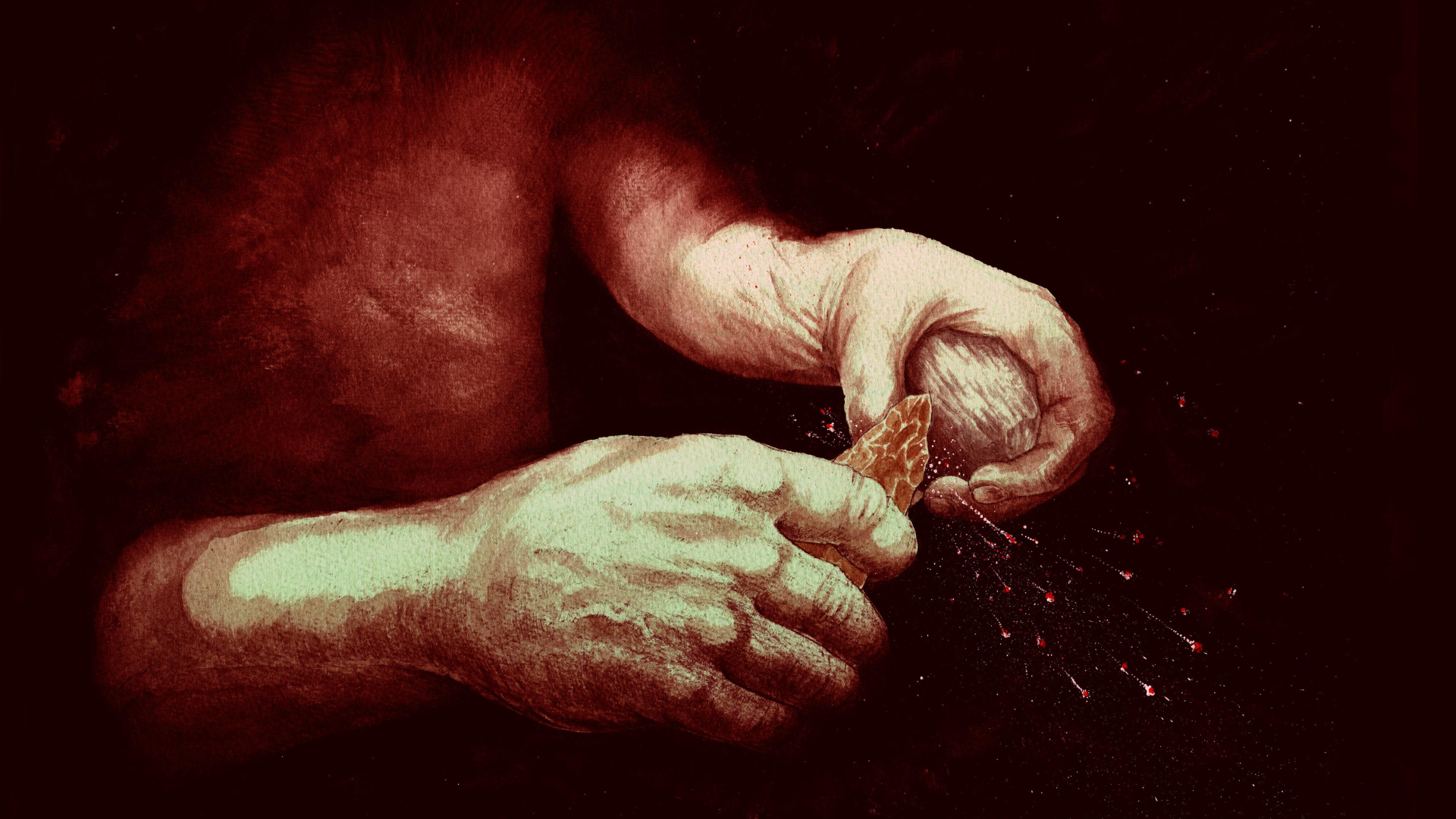
The use of fire is often considered one of the key moments in the history of human evolution, but a new study published this week pushes back previous estimates of when Neanderthals first learned to control fire by about 350,000 years.
A naturally occurring mineral called pyrite is found all over the world and produces a spark when applied to flint. But the mineral, also known as fool’s gold, is extremely rare at an archaeological site in Suffolk, England, dating back more than 400,000 years to when Neanderthals ruled the area, much older than any previous evidence of fire-making. Its presence at the scene suggests it was brought there intentionally, perhaps to start a fire, the researchers said in the study.
Because of the importance of controlled fire, paleoanthropologists have long debated the timing of this invention. The findings add to a larger debate about Neanderthal control of fire and its social and cultural uses.
Discover more archeology news:
-An 1,800-year-old “piggy bank” filled with Roman coins is unearthed in a French village
– New research suggests that hobbits may have become extinct due to drought forcing them into competition with modern humans.
—Jamestown settler John Smith tells the story of a lost Native American settlement finally discovered
Also featured in this week’s science news
– CDC committee filled with vaccine skeptics resolves to stop recommending universal neonatal hepatitis B vaccination
—’It’s just too hot to bear’: 2024 will be the hottest year on record in the Arab region, says first climate report
— New ‘physics shortcuts’ allow you to tackle quantum problems once reserved for supercomputers and AI on your laptop
– Glue strong enough to tow a car made from used cooking oil
Beyond the headlines

Two thousand years ago, the Roman Empire reached the limits of its power. Britain was the northernmost border of the Roman Empire and the point where the ancient superpower’s expansion stopped.
The Romans launched several invasions, keeping 10% of their total army in the province, but were unable to conquer the entire island. Instead, a militarized border split the island in two, marked by the 73-mile-long (118-kilometer) Hadrian’s Wall, which was the border for nearly 300 years.
One of the key sources of information we have gathered about this border region is the historic fort called Vindolanda. New discoveries at Vindolanda are changing the image of what life was like on the edge of the empire. The Roman frontier was not some inhospitable Game of Thrones outpost in the middle of nowhere. Instead, the clues point to a vibrant community that is a demographic snapshot of the entire empire. And this site sheds light on some of the least studied groups in Roman society.
something for the weekend
If you’re looking for something a little longer to read over the weekend, here are some of the best polls, interviews, and opinion pieces published this week.
—Earth’s crust hides enough ‘gold’ hydrogen to power the world for tens of thousands of years, new research suggests [Feature]
—“Intelligence comes at a price, and for many species the benefits are not worth it”: A neuroscientist’s take on how human intelligence evolved [Book extract]
—A female chemist who helps develop a drug for the remarkable but short-term recovery of children with leukemia is first barred from research—December 6, 1954 [Science history]
—#23: Distance around the edge of the circle — 6 down [Crossword]
Science in pictures

This may not seem like a particularly unremarkable rock, but its strange bleaching suggests that its home planet, Mars, may once have had wet, humid regions with heavy rainfall, similar to the tropical regions of Earth.
The rock seen in this photo taken by NASA’s Perseverance spacecraft appears to be kaolinite, an aluminum-rich type of clay that forms most often on Earth under very warm, steamy conditions. So how did it form in Mars’ cold, dry climate?
Follow Live Science on social media
Want more science news? Follow our Live Science WhatsApp channel to keep up with the latest discoveries. It’s the best way to get expert reporting on the go, but even if you don’t use WhatsApp, you can use Facebook, X (formerly Twitter), Flipboard, Instagram, TikTok, Bluesky, and LinkedIn.
Source link
