


Live concerts, fireworks, and the din of stadium crowds can reach dangerously loud volumes, loud enough to cause permanent hearing loss. But what is the loudest sound ever recorded on Earth?
The answer depends on what you mean by “sound” and whether you include old historical reports or trust only measurements made with modern scientific instruments.
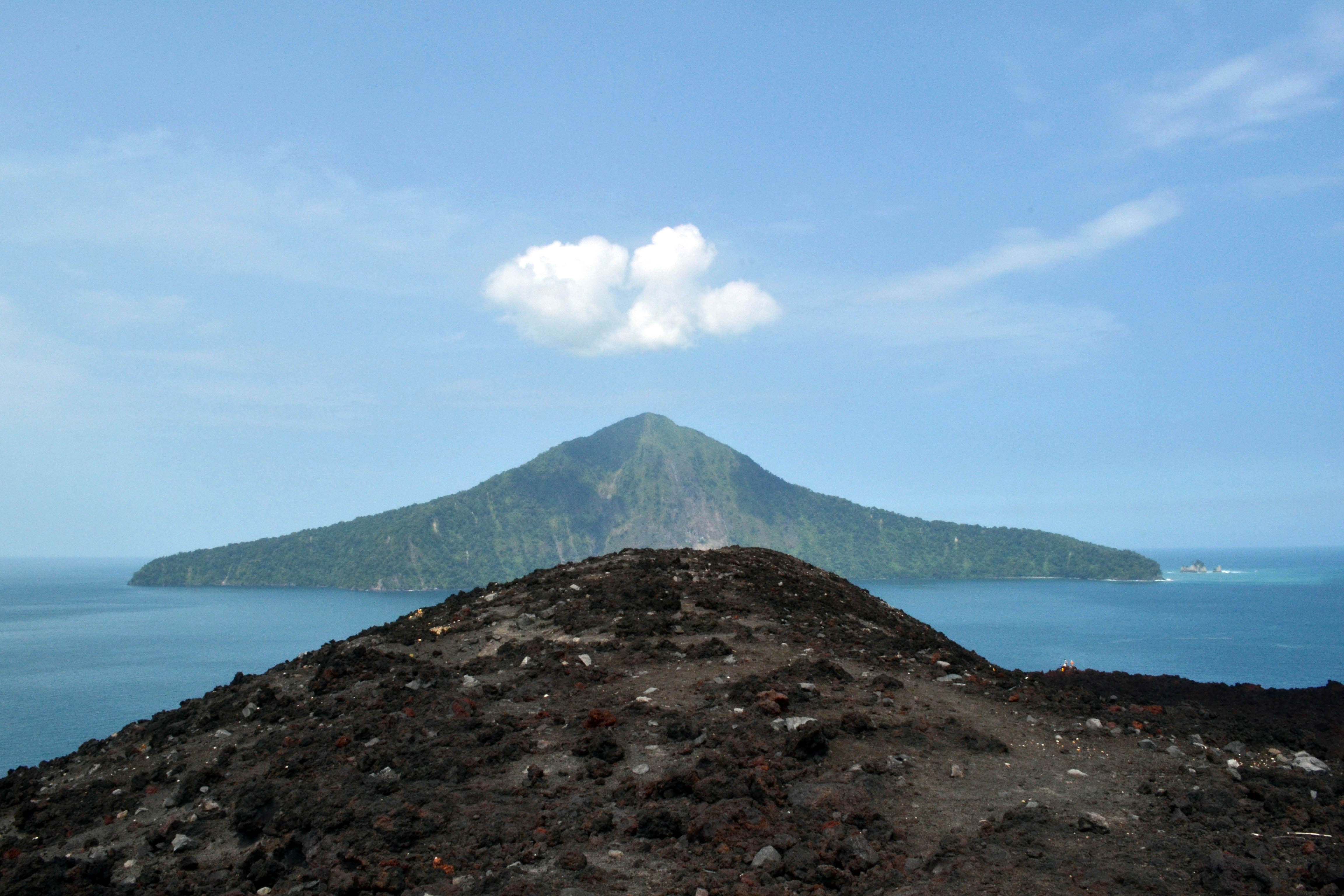
The 1883 eruption of the Indonesian volcanic island Krakatoa (also spelled Krakatoa) is considered the loudest in history. People heard the explosion more than 1,900 miles (3,000 kilometers) away, and barometers around the world picked up the pressure waves. At a distance of 100 miles (160 kilometers), the eruption reached an estimated 170 decibels, enough to cause permanent hearing loss. Sailors reported that the impact was strong enough to rupture eardrums 40 miles (64 kilometers) away.
you may like
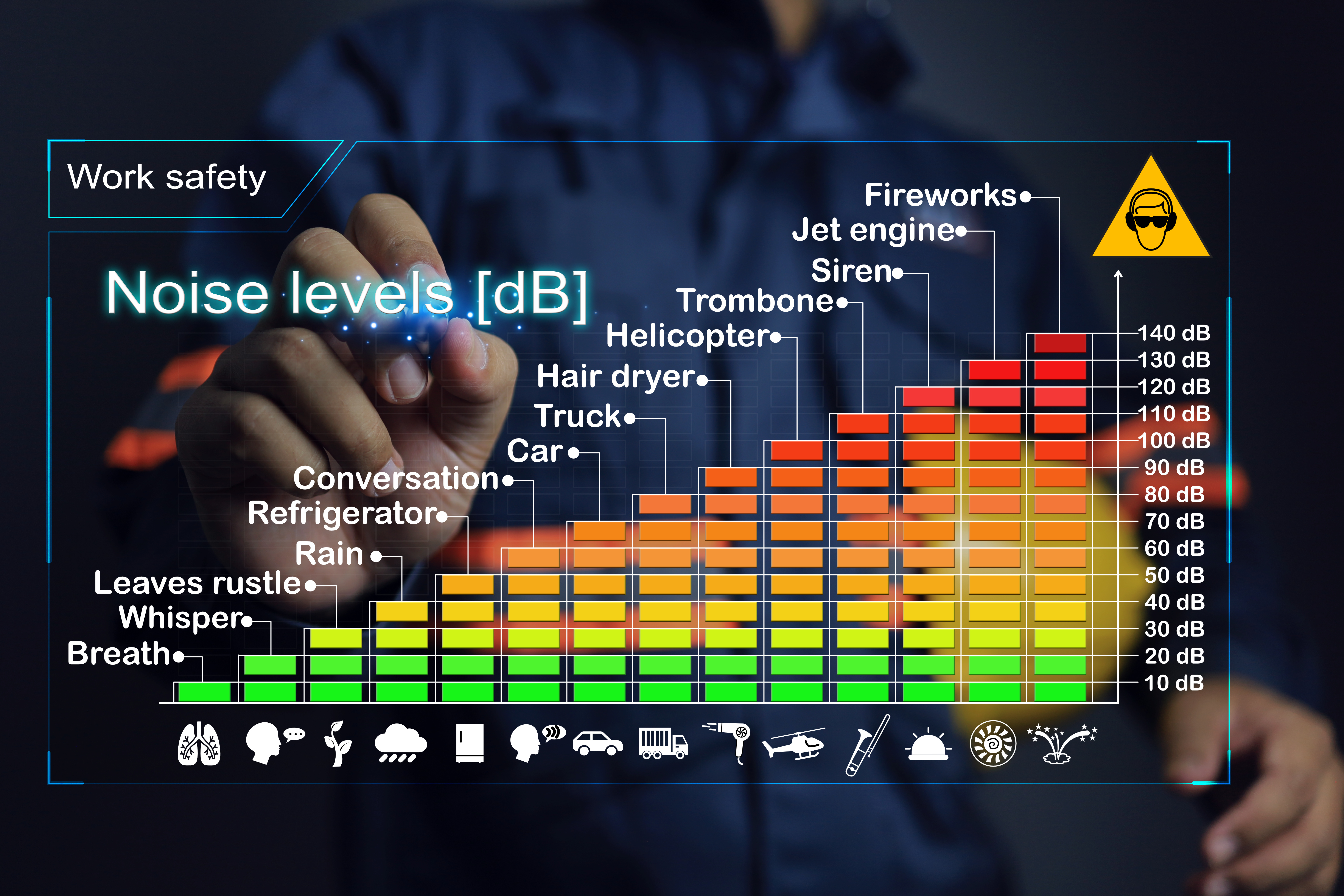
Normally, people can tolerate sound up to about 140 decibels, but anything above that becomes painful and unbearable. According to the National Institutes of Health, hearing loss can occur if you listen to 85 decibels for several hours, 100 decibels for 14 minutes, or 110 decibels for 2 minutes. On the other hand, a vacuum cleaner has about 75 decibels, a chainsaw has about 110 decibels, and a jet engine has about 140 decibels.
Current estimates are that the sound of the Krakatoa explosion reached approximately 310 decibels. At this level, the sound wave no longer behaves like normal sound (particles vibrate, creating regions of compression and rarefaction). Instead, at about 194 decibels, it turns into a shock wave, a powerful pressure front created when something moves faster than the speed of sound. Krakatoa’s shock wave was so powerful that it circled the planet seven times.
But Michael Vollander, professor and director of Germany’s Institute of Hearing Technology and Acoustics at RWTH Aachen University and president of the Acoustical Society of America, said we don’t really know how big the Krakatoa eruption was at its source because no one was close enough to make measurements.
“Assumptions can be made about sound propagation, but they are highly uncertain,” he told LiveScience in an email.
Another candidate for the loudest sound is the 1908 Tunguska meteorite explosion over Siberia. The explosion leveled hundreds of square miles of trees and sent pressure waves around the world. The Tunguska explosion was about the same size as the Krakatoa explosion, about 300 to 315 decibels, but like the Krakatoa eruption, the Tunguska explosion was only recorded by instruments that were very far away.
loudest sound in modern times
If we limit this question to modern times, when scientists had a worldwide network of barometers and infrasound sensors, a much more recent event takes home the top prize.
“I think the ‘loudest’ sound recorded was the January 2022 eruption of Hunga, Tonga,” David Fee, a research professor at the Geophysical Institute at the University of Alaska Fairbanks, told Live Science via email. “This massive volcanic eruption produced sound waves that traveled across the globe multiple times and were heard by people thousands of miles away, including in Alaska and central Europe.”
you may like
Milton Garces, founder and director of the Infrasound Institute at the University of Hawaii, agrees. “If you rephrase the question as ‘What is the loudest sound recorded in the modern digital era?’, then by far the loudest sound is from Tonga in ’22,” he told Live Science in an email.
One of the scientific observatories closest to the submarine eruption – in Nuku’alofa, about 68 kilometers away – recorded a pressure increase of about 1,800 pascals. (A detonation of a 200-megaton chemical explosion would create an overpressure of about 567 pascals at a distance of about 560 miles, or 737 km, Garces explained.) If you try to convert this to a normal “decibel” number at a distance of 3 feet (1 meter) from the source, you get about 256 decibels. But Garces said that’s bad science because it’s not a normal sound wave at all. Close to the source, it acted like fast-moving air forced outward by an explosion. The Tonga explosion was too loud to fit on the normal decibel scale.
sounds made by humans
Oddly enough, Fee pointed out that the most powerful pressure waves in recent history were beyond the range of human hearing, so most people couldn’t hear them.
Scientists have been trying to generate huge pressure waves in the laboratory. In one experiment, the researchers used an X-ray laser to fire a tiny jet of water, generating pressure waves estimated at about 270 decibels. (This is even louder than the launch sound of the Saturn V rocket that carried the Apollo astronauts to the moon, estimated at about 203 decibels.)
However, the laser experiment was conducted in a vacuum chamber, so the 270 decibel pressure waves were completely silent. Sound waves require a medium such as air, water, or solid material to travel.
“The pressure inside the vacuum chamber is a little trickier,” Garces says. “It’s like cosmic pressure. Supernovae may generate huge radiation pressure, but it doesn’t radiate out as what we would call sound.”
“The 2022 Tonga is the champion for the most powerful sonic wave ever recorded in modern times,” Garces said.
Source link
