


In 30 BC, Mark Antony and Cleopatra VII died by suicide after being defeated by Octavian’s forces in a civil war.
But what would have happened if Antony and Cleopatra had defeated Octavian, who became Rome’s first emperor? Would they have become rulers of Rome? How would history have been different?
you may like
civil war
First, it helps to understand what led to the war. In the aftermath of Julius Caesar’s assassination in 44 BC, three major factions vied for power. Mark Antony, one of Caesar’s generals. Brutus and Cassius, both senators. However, the senators were quickly defeated and died by suicide.
Before his death, Caesar had an affair with Cleopatra VII, ruler of Egypt. Cleopatra had a son named Caesarion, and she claimed that Caesar was her father. But he never recognized the boy as his son. After Caesar’s death, Cleopatra and Antony became a couple and had three children, but probably never officially married.
During this time, an uneasy power-sharing arrangement existed between Octavian, based in Rome, and Antony, based in Alexandria. But then, in 32 BC, a civil war broke out for control of Rome and its territories.
The turning point in the civil war was the Battle of Actium, which took place on September 2, 31 BC. In this naval battle, Antony and Cleopatra’s fleet was destroyed and Octavian gained control of the Mediterranean Sea. Further battles took place on land, but Antony and Cleopatra’s forces were unable to recover from the losses of their fleet.
Cleopatra and Antony died in 30 BC, and Egypt was incorporated into the Roman Empire as a province in 30 BC. Shortly thereafter, in 27 BC, the Roman Senate granted Octavian the title “Augustus”, making him the first emperor of the Roman Empire.
But what would have happened if the lovers had won against Octavian?
Cleopatra only?
Scholars say there are a wide range of possibilities for this “what if” scenario.
you may like
One possibility is that Cleopatra’s power was limited to Egypt and parts of the Middle East. Some scholars have stated that it would have been difficult for Cleopatra to play a major role in the Eternal City. “I don’t think there was a role for Cleopatra in Rome,” Geoffrey Tatum, professor of classics at New Zealand’s Victoria University of Wellington, told Live Science in an email, noting that Octavian’s supporters used propaganda to demonize Cleopatra.
Lee Fratantuono, professor of ancient classics at Maynooth University in Ireland, agreed, pointing out that Cleopatra, a Macedonian-Egyptian ruler, would not have been well-received by the Roman people. “Her presence stirred up patriotism in Italy, and it is highly unlikely that Antony would have been able to achieve long-term success in the Midwest and Mediterranean had she been so visible,” he told Live Science via email.
Antony had sons and stepchildren from a previous marriage, and may have sought to place them in positions of power in Rome in his place. Antony “had something that Octavian didn’t: a wealth of children and stepchildren, especially male children, that he could draw on,” Jane Draycott, senior lecturer in classics at the University of Glasgow, told Live Science by email.
Antony and Cleopatra, along with their children, may have focused more on Egypt and the Near East. There, the Romans faced a formidable enemy: the Parthian Empire, in what is now mostly Iran. Antony may have wanted to spend his time fighting Rome rather than governing it itself, Draycott said.
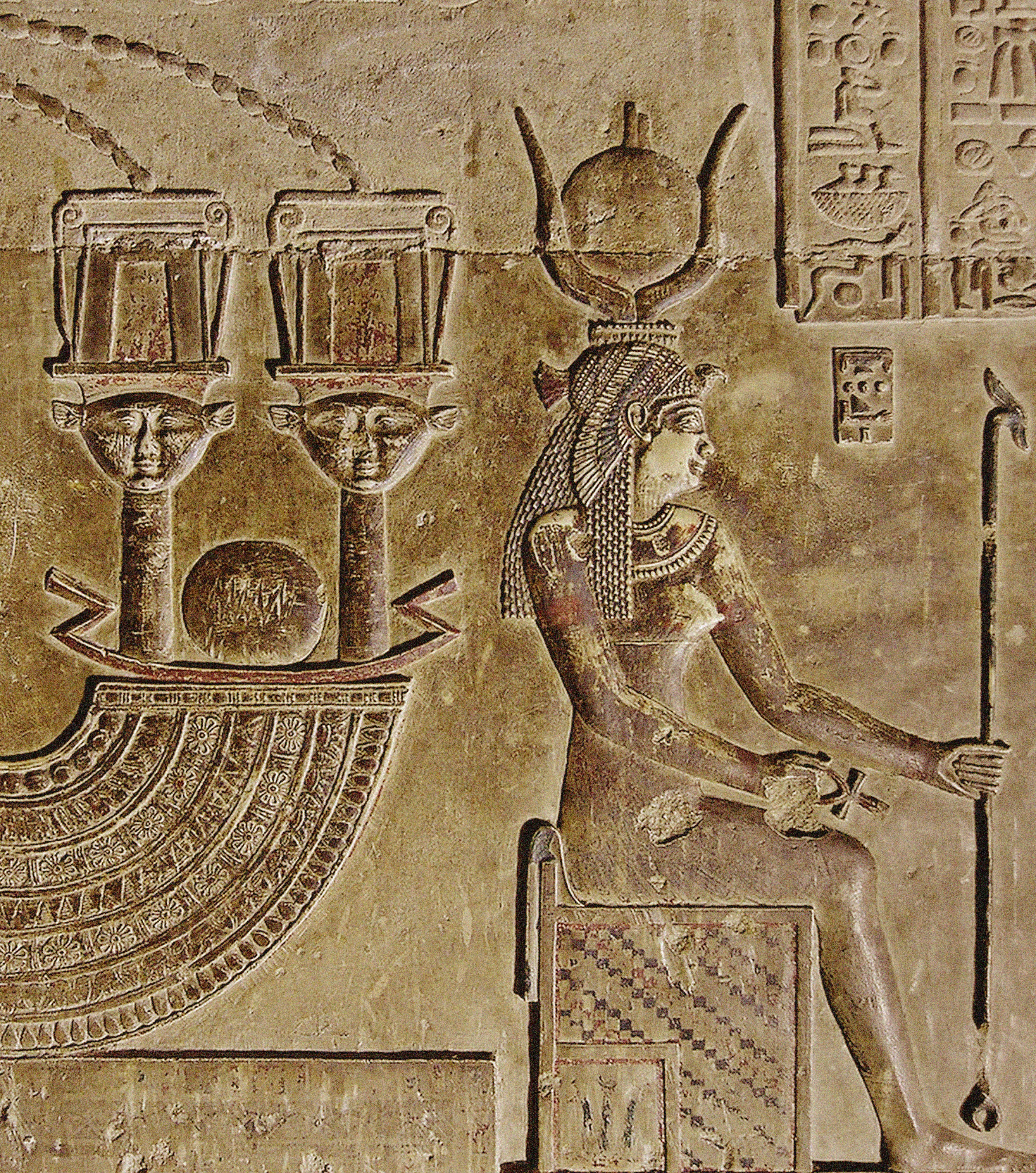
Is Cleopatra queen?
Another possibility is that despite her opposition to Cleopatra, she seized power in Rome and ruled alongside Antony, who was to become emperor, Prudence Jones, a classics professor at Montclair State University in New Jersey, said in an email.
If this could be achieved, Jones said, “one might hope for a greater balance between the eastern and western parts of the Roman Empire,” since Egypt was an important part of the eastern part of the empire.
“European history might have turned out very differently if there had been a better balance of power between the eastern and western parts of the empire, rather than a concentration of power in Rome,” Jones told Live Science. “Western Europe might have become less Romanized and remained more rural for longer if more resources had been directed eastward, especially in Gaul and Britain. Perhaps there would have been fewer Romance languages, more modern languages related to Greece, and Greek culture might have had a greater influence across Europe.”
Jones said Egypt “may have retained some degree of independence and functioned as a vassal state.” Antony probably avoided centralizing the Roman government as much as Octavian did.
“It is inconceivable that Antony had Octavian’s desire and skills for developing a bureaucracy,” Jones said. “If central control had been weak, the Roman Empire might have become a Greek-Romano-Egyptian confederation.”
Return it to the Senate?
Another possibility, Tatum said, is that Antony might have returned the city and some of its territory to the Senate, keeping Rome as a republic, rather than trying to control Rome himself or through his sons and sons-in-law.
“He could have handed the republic over to the Senate and Congress,” Tatum writes in his book, “Noble Ruins: Mark Antony, the Civil War, and the Fall of the Roman Republic” (Oxford University Press, 2023). “Enjoying wealth and prestige from afar, perhaps even from Alexandria, would have allowed him to exert influence without controlling political affairs or changing the fundamental nature of the republic.”
Whatever decision Antony and Cleopatra made could have sparked a new civil war with Rome and other nobles vying for control of its territories, Tatum said in an email.
Roman Emperor Quiz: Test your knowledge about the rulers of ancient empires
Source link
